Resilient Leadership: Fostering Mental Toughness on Your Team

A resilient team is not one that never feels pressure; it is one that learns how to be honest and stay steady when pressure arrives. Strong leaders build that steadiness by creating a culture of trust, reflection, and practical support, rather than expecting people to simply “tough it out”.

Not long ago, I worked with a leadership team that was entering one of the hardest periods of its history. The organization was growing rapidly – along with the workload. Staff were exhausted, and every meeting seemed to begin with bad news. One morning, after difficult and demanding previous weeks, a manager stood up in silence, looked around the room, and said, “I’m not sure we can carry on the way we are.” What happened next changed the tone of the entire team. Instead of minimizing the pressure, the leader acknowledged it, invited honest conversation, examined carefully the ways that the team could support each other more, and shifted the focus from blame to problem-solving. That moment did not remove the stress, but it opened a door to restoring confidence. The team began to believe that they could face hard things together.

Mental toughness is often misunderstood. It is not pretending everything is fine, nor is it pushing people to suppress emotion, and implicitly or explicitly told to “suck it up.” In leadership, it means helping people remain calm, focused, and effective under pressure while staying connected to purpose and one another. It is a blend of resilience, emotional regulation, and commitment, and it can be strengthened through deliberate habits and a supportive culture.

Here are three strategies to get started:

Start with psychological safety. Build an environment where people can speak honestly. Teams become stronger when people can admit mistakes, name concerns, and ask for help early. Psychological safety does not make a team soft; it makes them adaptable. When people are not busy protecting themselves, they can spend more energy solving problems.

Model this by being transparent about your own setbacks and by responding to bad news with curiosity instead of blame. A simple question like, “What are we learning here?” can shift the energy in a room. Over time, that kind of response teaches the team that pressure is something to navigate, not something to hide from.

Encourage recovery habits. Treat recovery as part of performance. Mental toughness is not built by constant strain; it is built by balancing effort with rest, reflection, and renewal. Teams that are always “on” eventually lose clarity, creativity, and patience.

Encourage short pauses before difficult meetings, regularly debrief after intense events, and initiate basic routines that support energy management. This might include walking breaks, breathing exercises, or a clear boundary around after-hours communication. When recovery is enouraged, people are less likely to burn out and more likely to stay engaged when the next challenge arrives.

Reframe challenge as growth. Help the team see difficulty as a training ground. Resilient leaders do not deny setbacks; they use them to build skill, confidence, and perspective. When people view challenge as evidence of failure, they become defensive. When they view it as part of growth, they become more courageous.

One useful practice is the “lessons learned” debrief. After a tough week, project, or incident, ask four questions: What went well? What was hard? How did we support each other? What will we do differently next time? This keeps the team from getting stuck in frustration and helps turn experience into wisdom. It also reinforces the idea that progress matters more than perfection.

Leadership That Lasts

Resilient leadership is not about pretending to be the strongest person in the room. It is about creating conditions where others can stay strong together. That means building trust, protecting recovery, and helping people reframe pressure as part of the work of growth.

Teams do not become mentally tough by accident. They become tougher when leaders consistently create safety, model steadiness, and encourage learning. In the end, the most resilient teams are not those that avoid difficulty, but those that learn how to move through it with courage, clarity, and connection.
Trauma leaves traces on our minds and bodies.

It leaves an imprint on everything we touch, the way we think, the way we feel, the way we interact with those around us, and the way we live.

Join me this Friday, April 25th for a webinar focused on Trauma, Loss & Recovery.

  1. Leave with a greater understanding of trauma, its impact on our lives, and what a healing journey can look like.
  2. Learn how trauma is not what happens to you; it is what happens inside you because of what happens to you.
  3. Leave with guideposts for navigating the trauma and the journey of recovery, along with insights for supporting others through their trauma journey.

Click here to secure your complimentary seat.

SHATTERED OPEN – How Tragedies Can Help Us Grow

In the summer of 2024 approximately thirty percent of the beautiful townsite of Jasper, Alberta was destroyed in a fire that swept through that community. Of the 1,113 structures in the town, 358 of them burned. The wildfire covered an estimated 33,000 hectares, the largest wildfire recorded in the park in a century. A mass evacuation of 25,000 residents and visitors occurred in July last year with the evacuation order lasting until August 17. Tragically, one firefighter lost his life during the containment efforts. The insurance claims for damages are reaching nearly a billion dollars, making this tragedy one of Canada’s most expensive natural disasters.

There isn’t a person connected to this pristine community who was not impacted by the disaster. And the journey to recovery, rebuilding, and healing will last a lifetime.

While those who don’t live in Jasper can’t possibly know what it was like to go through the fires, perhaps some who did can help us understand the choices and challenges we all face in times of tragedy and trauma: Will we be shattered and defeated, or shattered open and transformed?

We all know people who have risen from a life interrupted, from the ashes of trauma – illness, loss of a loved one or business or home, divorce, layoff, bankruptcy, abuse – to emerge stronger, wiser, and more connected to their passion and purpose. How can you embrace unimaginable difficulty in a way that allows the pain to break you open so a better person can emerge from it?

Here are three reminders to get through a tragedy:

  1. There is no prescribed way to get through a devastating loss. The only way to get to the other side is through it. And you get through it by honoring whatever you’re experiencing.
  2. We’ve all heard that “when one door closes another one opens.” What they don’t tell you is that it’s hell in the corridor. It’s the corridor that’s toughest to navigate.
  3. There’s no such thing as “closure.” Closure is a fabricated concept used to give us an artificial sense of comfort in the pain. Instead of seeking closure, we heal by acknowledging and integrating gratitude and grief into our lives simultaneously. Healing is a life-long journey.

RECHARGING LEADERS: Redefining Empathy and Resilience in the Workplace

In a recent coaching session, a leader, who is very caring and in touch with his people, told me of a recent exchange he had with one of his team members where he outlined his expectations for the role he was in. The expectations didn’t seem excessive to me, but the employee responded with a letter to HR that his manager was “creating an unsafe work environment and putting unnecessary stress” on him. He expressed that this was a trauma he was experiencing at work that necessitated a stress leave.

I know there are always two sides to a story. I also know that many conscious, caring leaders grapple with how to build “high performing” cultures while navigating between holding people accountable for performance and avoiding being overly harsh or creating unnecessary stress on those they lead and serve.

There has been an important shift in recent years that emphasizes employees as whole people rather than “units of productivity.” This shift necessitates an attention to empathy, acknowledging the internal states and personal challenges of those around us.

But has all this sensitivity to people helped us to be mentally stronger? Is it empowering us and making us more resilient than previous generations? As critical as empathy and caring are, has it all gone too far? Are leaders working too hard to keep employees inspired and motivated? I believe it’s worth some consideration. It’s time to recharge leaders by redefining empathy and resilience in the workplace.

Some perspectives for leaders to consider:

  1. Take care of yourself. This has nothing to do with self-centeredness. It has to do with ensuring that your leadership comes from overflow not from emptiness. You can’t give what you don’t have. To inspire others, you must be inspired. Many of us give more attention to recharging our phones than recharging ourselves. Yet it still holds true that we need to look after ourselves so we can be there for others. Take care of yourself – whatever that means to you.
  2. Redefine empathy. Empathy has emerged as a critical component of effective leadership, reshaping how organizations approach workplace dynamics and employee well-being. But empathy isn’t about coddling people, making it easy, rescuing people from their unhappiness, or lowering your standards and expectations. Empathy fatigue often comes from working harder than the person we have empathy for. In the recovery and addictions field this is called enabling. Empathy, instead, is about supporting people, feeling with them, helping them find and develop the resources they require to do their job, and then being in their corner through the tough challenges that come with that responsibility. If empathy isn’t empowering people, it’s not empathy.
  3. Hire strong people. Work is hard. That’s why we call it work. Don’t use psychological safety as a weapon to hobble your manager. Managers have an accountability to hold themselves and their team to high standards that will require strength. Nobody takes pride in doing things that are easy. Let people know what is expected of them before you hire them and when they come on board. And make sure they’re up to the challenge. Hire people who are strong givers and are willing to do their part to co-create an inspiring, caring culture that will produce the right results.
  4. Make results your highest priority. Organizations are not in the business of taking care of people. Organizations are in the business of getting results. Of course, you won’t get results – and certainly not long term – if you don’t take care of people. We also won’t get the needed results if we burn our leaders out. Making results matter isn’t just good for organizations. It’s good for the mental health of the people who work in those organizations. It’s good for us all to be contributing to the world by producing meaningful results. It’s good for human beings to set our “problems” aside, lean into the grind, and push through to the other side. Getting stronger is what builds resiliency, not getting let off the hook. Just be sure that the results you are working on together are both challenging and meaningful and remember the purpose of business: it’s a tool to create what matters in life.

A tough load to carry

The last few years have been difficult. People have struggled and persevered and faced tremendous challenges. Organizations and families have been divided. As leaders, we may have carried an extra burden to ensure our businesses continued to thrive and grow. It’s not easy when there’s hardship all around and you feel you have to be strong all the time.

How, as leaders, do we reconcile the need to be steadfast, confident, and strong with the reality of being human?

Here are three suggestions:

1. Be real. It takes courage to openly face your feelings and It will earn you respect. It’s also healthier for you and for the people you serve. Facing your emotions decreases your risk for developing PTSD symptoms in times of crisis and adversity.

2. Show up. Don’t put your emotions in the driver’s seat. Being emotional has nothing to do with being weak. Take a few moments to be human, then be a human that rolls up their sleeves and gets back to work. Openness and honesty about our own feelings opens the door to be there for others This is what builds a strong community.

3. Have a support system away from work. Don’t rely on your team to take care of you. That’s not their job. We all need a trusted confidant away from work to support us, provide perspective, and hold us accountable through the hard times.

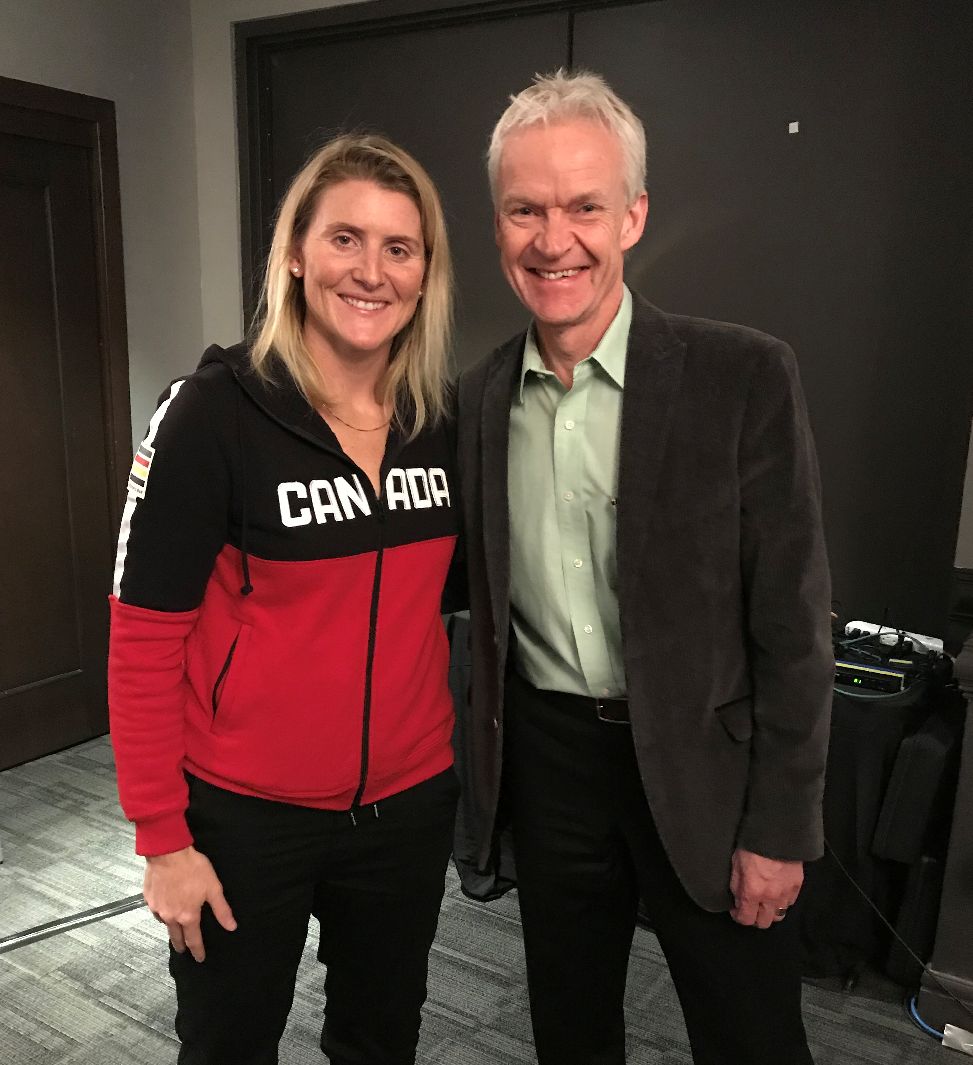
Hayley Wickenheiser

I’ve had the honour of presenting with Hayley Wickenheiser at several events. She’s an incredible athlete, community leader, physician, and businesswoman who inspires audiences to give their best in everything they undertake. Regarded as one of the world’s best female hockey players, Hayley is a four-time Olympic gold medalist and has inspired young women and female athletes around the globe. Hayley stays connected to her humble Saskatchewan roots, and lives with integrity, clarity, and honesty – the making of a true leader.

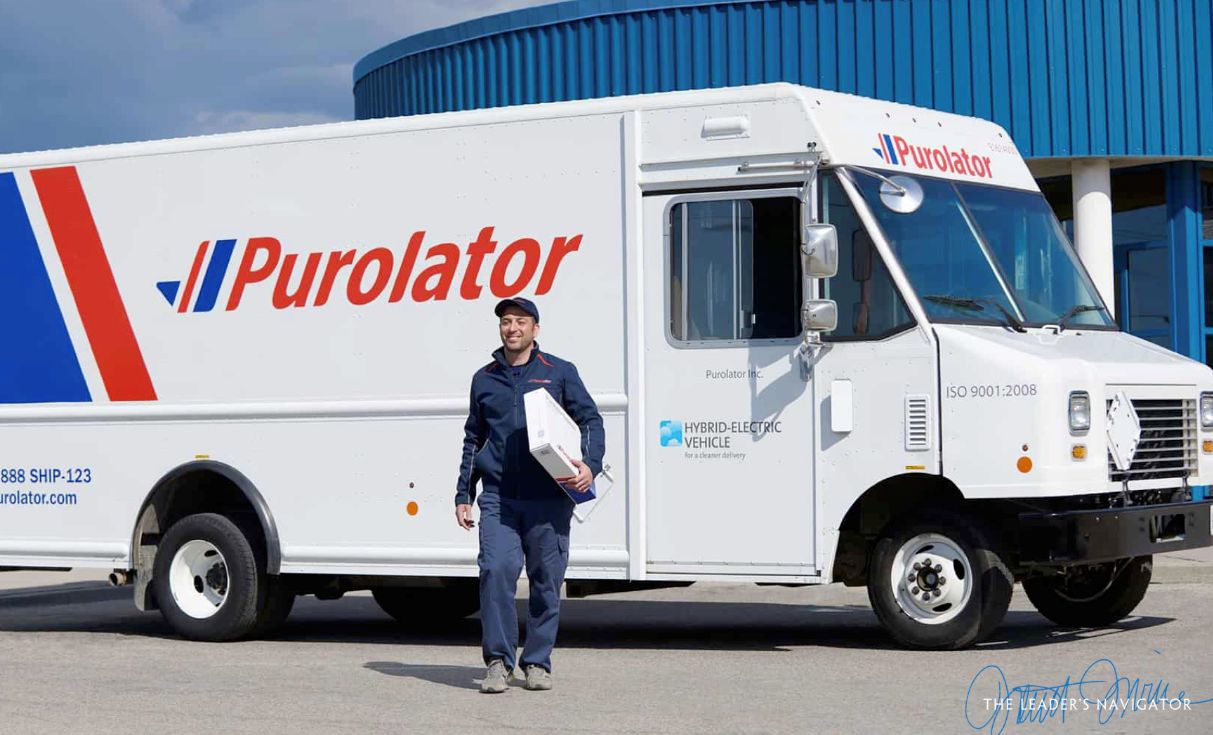
Just prior to the pandemic, Hayley and I presented to the senior leadership team at Purolator. (Pictured below is Hayley playing table hockey against the CEO, John Ferguson.)

At the evening supper event, John asked Hayley a series of intriguing questions:
“How many women are invited to attend the Olympic tryouts, Hayley?”
“About 100,” Hayley responded.
“How many make the team?”
“About 30.”
“So…” John reflected, “What’s the difference between the 30 who make it and the 70 who don’t?”
“Little to do with talent,” Hayley quickly explained. “The difference was consistency and mental toughness.”

Hayley, in no way was being disrespectful to those who didn’t make the Olympic team. She has the utmost regard for every one of those incredible athletes.Her answer, however, get me thinking about the youth in my life and what I am doing to foster resilience in them.

As parents, coaches, teachers, caregivers, and leaders of young people, are we creating an environment that builds mental toughness or are we making it too easy for these kids? Are we helping them face the demands of life or teaching them to avoid the tough stuff? Are we supporting them through the challenges rather than rescuing them from the challenges?